Tiny Apartment Kitchen Decor Ideas: 7 Myths Busted
Common Kitchen Myths That Waste Your Money — And What Actually Works
A lot of small-kitchen advice floating around Pinterest sounds smart until you actually try it in a 60-square-foot galley kitchen. Rip out the upper cabinets. Paint everything white. Never use dark colors. Some of this holds up. Most of it doesn’t, and I’ve watched clients spend real money “fixing” a tiny apartment kitchen based on a rule that was never true to begin with.
Table of Contents
If you’re hunting for tiny apartment kitchen decor ideas that actually hold up in a real 400-square-foot rental and not just in a staged photo, this is for you. Below, I’m walking through the seven myths I hear most often from clients and readers, what’s actually true, and what I’d tell a friend to do instead. Table of Contents above will let you jump straight to whichever myth you’re currently being talked into.
One more thing before we get into it: small kitchen design isn’t really about a single trick like “always go white” or “never use dark colors.” It’s about contrast, lighting, and how much you choose to leave visible on any given surface. Keep that in mind as you read through each one.
Myth: Dark Cabinets Always Make a Tiny Kitchen Feel Smaller
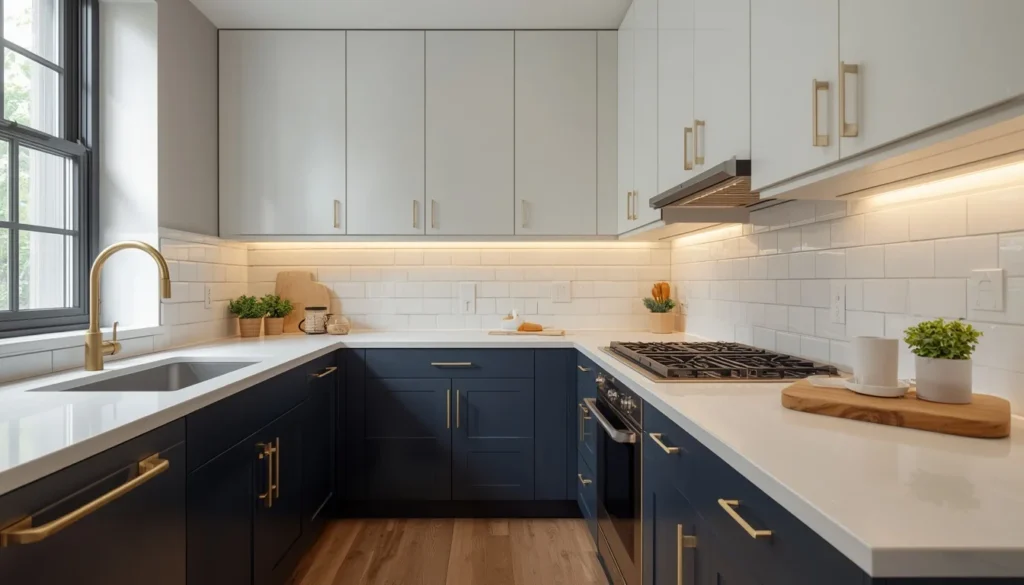
This is the one I hear most from people planning tiny apartment kitchen decor ideas on a Pinterest board, and it’s the one that costs them the most regret. Dark lower cabinets don’t shrink a room. Poor lighting and zero contrast do.
I worked with a client in a 7×8-foot galley kitchen who wanted charcoal cabinets but was talked out of it twice by well-meaning friends. When she finally painted the lowers in a deep navy (Farrow & Ball “Stiffkey Blue” in a satin finish) and kept the uppers and countertop a warm white, the room read as intentional and layered, not cramped. The trick was adding 3000K under-cabinet LED strip lighting and keeping the backsplash reflective — a glossy white subway tile bounces light back into the room instead of absorbing it.
If you’re nervous about going dark, test it on the lower cabinets only and keep everything above eye level light. That contrast is what your eye actually reads as “spacious,” not the absence of color.
Myth: You Have to Rip Out the Upper Cabinets to Open Up the Room
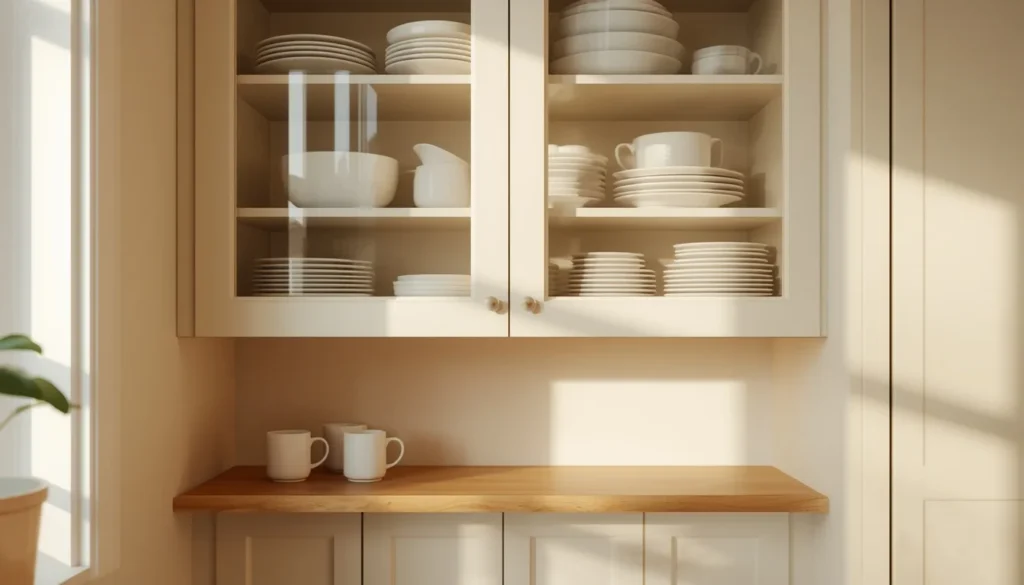
Full demolition videos make for great content, but ripping out upper cabinets in a rental — or even a small owned unit — usually costs you storage you’ll desperately want back within a month. I’ve had two clients redo this exact “fix” after realizing they had nowhere to put dinnerware.
A gentler version works almost as well. Swap the doors on just one or two upper cabinets near the sink for glass-front inserts or leave one open as a display shelf for glassware. Glass-insert conversion kits run about $40 to $80 per door, compared to $300 or more for a full demo-and-haul job. Add one slim 24-inch floating shelf below the remaining cabinets to break up the wall of doors without losing enclosed storage.
The visual openness people are chasing usually comes from breaking the monotony of solid cabinet doors, not from removing storage altogether.
Myth: Open Shelving Is Always the Best Fix for a Small Kitchen
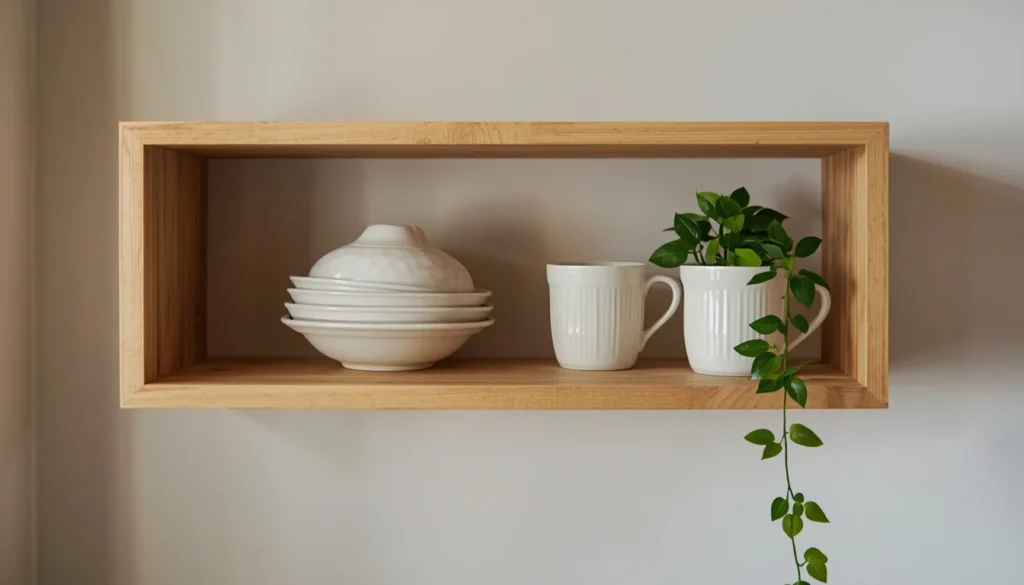
Open shelving photographs beautifully. It also collects grease film and dust shockingly fast if you cook more than twice a week, and in a kitchen under 70 square feet, visual clutter reads louder than in a bigger room because there’s nowhere for your eye to rest.
Here’s what most people get wrong: they replace every upper cabinet with open shelving at once. A better approach is to keep most storage enclosed and dedicate one 24 to 36-inch shelf run near the stove for daily-use items only — a few bowls, everyday mugs, a small plant. Everything else stays behind doors. This gives you the airy look in photos without turning grocery day into a styling project.
If you’re renting and can’t drill new shelving brackets, look for tension-mounted shelf units that clamp inside existing cabinet openings instead of adding wall holes.
Myth: All-White Kitchens Are the Only Way to Make It Feel Bigger
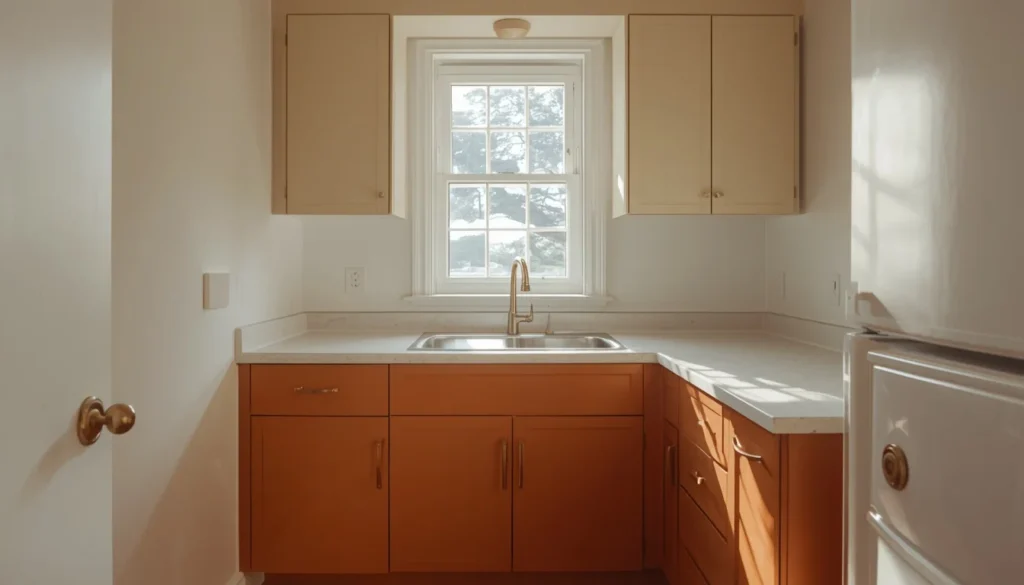
White reflects light, that part is true. But a kitchen that’s white ceiling to floor with no variation can actually flatten a small space, making it harder to tell where one surface ends and another begins. It also shows every splash and fingerprint, which is a real problem in a kitchen you use daily.
Warm off-whites like Benjamin Moore “Swiss Coffee” or Sherwin-Williams “Alabaster” keep the airy feel while adding just enough depth that the room doesn’t look flat in photos or in person. Benjamin Moore small-space paint color guide — paint brand resource For anyone wanting a bit more personality, a soft sage or muted terracotta on a single accent wall or the lower third of cabinets, paired with white trim, keeps things feeling open while giving the kitchen an actual identity.
If you have kids or pets, ask for a satin or semi-gloss finish on lower walls and cabinets specifically — it wipes clean far more easily than eggshell or matte.
Myth: You Can’t Fit an Island in a Tiny Apartment Kitchen
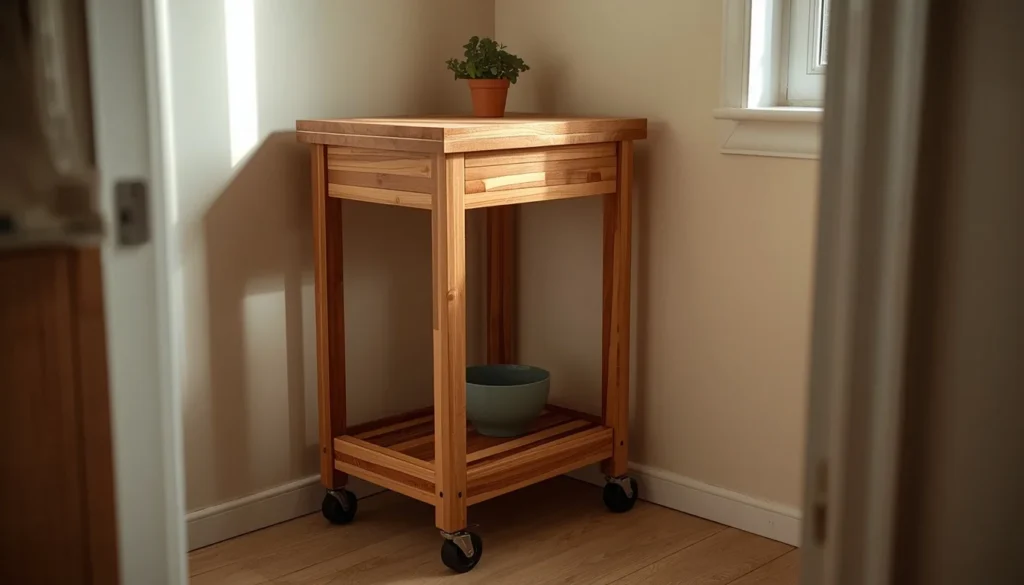
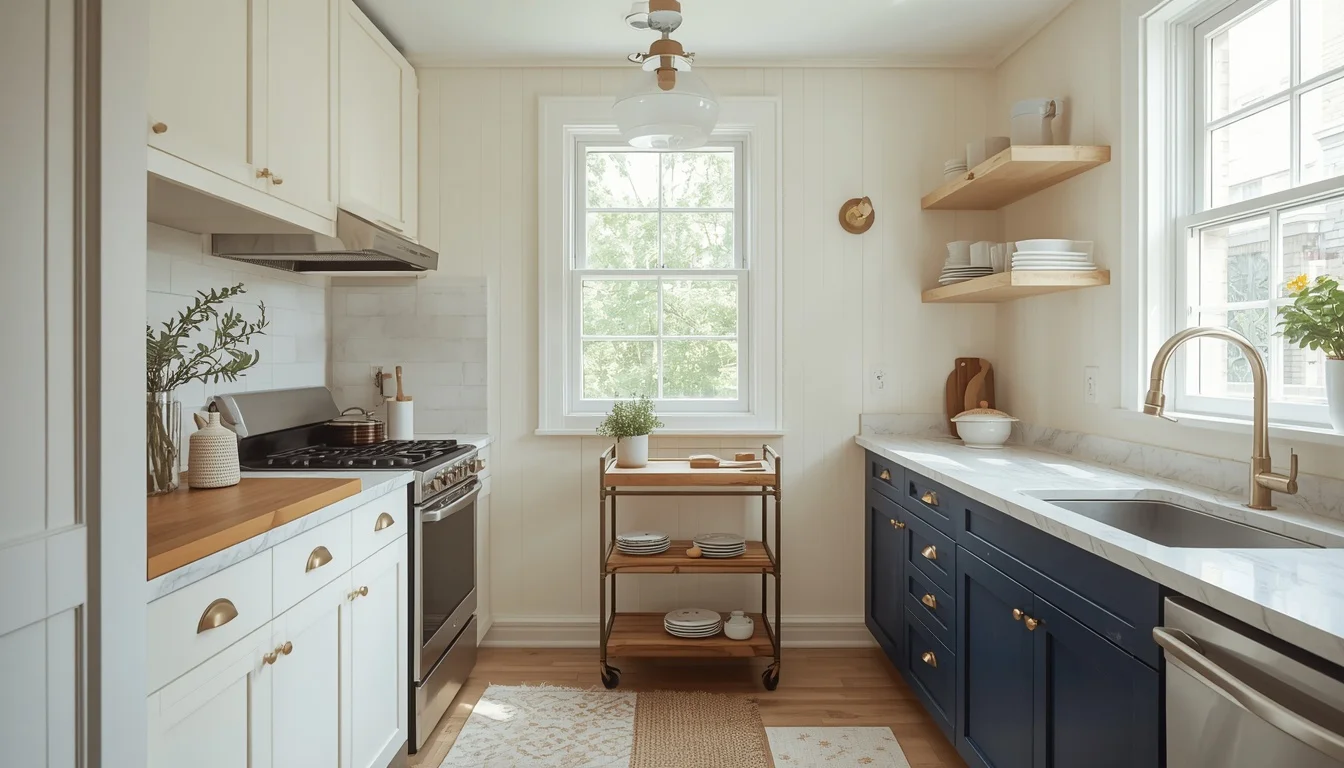
A built-in island obviously isn’t happening in most tiny apartment kitchens, and that’s fine — you don’t need one. A rolling cart with locking caster wheels, about 24 to 30 inches wide, gives you the same functional benefit: extra prep surface and storage that shows up exactly when you need it and rolls out of the way when you don’t.
Look for a butcher-block top cart with a lower shelf or drawer for cutting boards and small appliances. Budget-wise, these run anywhere from $80 for a basic version to around $250 for a solid wood option that’ll actually hold up to daily chopping. [INTERNAL LINK: small apartment living room furniture that doubles as storage] It’s the same space-multiplying logic that works in a studio living room, just applied to the kitchen.
Park it against an empty wall when you’re not cooking, and you get back the floor space without giving up the extra counter.
Myth: Renters Can’t Really Decorate a Tiny Kitchen
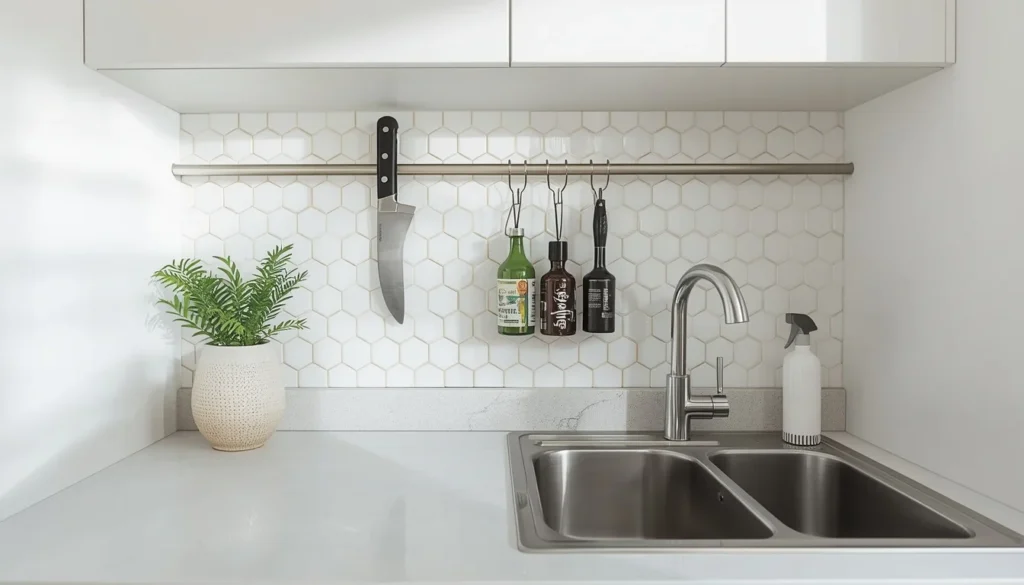
This one keeps people from doing anything at all, which is a shame because most of the best tiny apartment kitchen decor ideas are fully reversible and landlord-safe. Peel-and-stick backsplash tile costs about $25 to $40 for a box covering roughly 10 square feet, goes up in an afternoon, and comes off clean when you move.
Removable wallpaper works the same way on an accent wall or the inside of open shelving. Magnetic knife strips and hanging racks that use adhesive hooks rated for 5 to 10 pounds add function without a single drill hole. Even a tension rod under the sink turns dead cabinet space into a hanging spot for spray bottles and cloths.
None of this requires landlord approval, and all of it comes down cleanly at move-out — which is exactly the kind of low-risk upgrade renters actually need, not another rule telling them to wait until they own a place.
Myth: More Storage Always Means a Better-Looking Kitchen
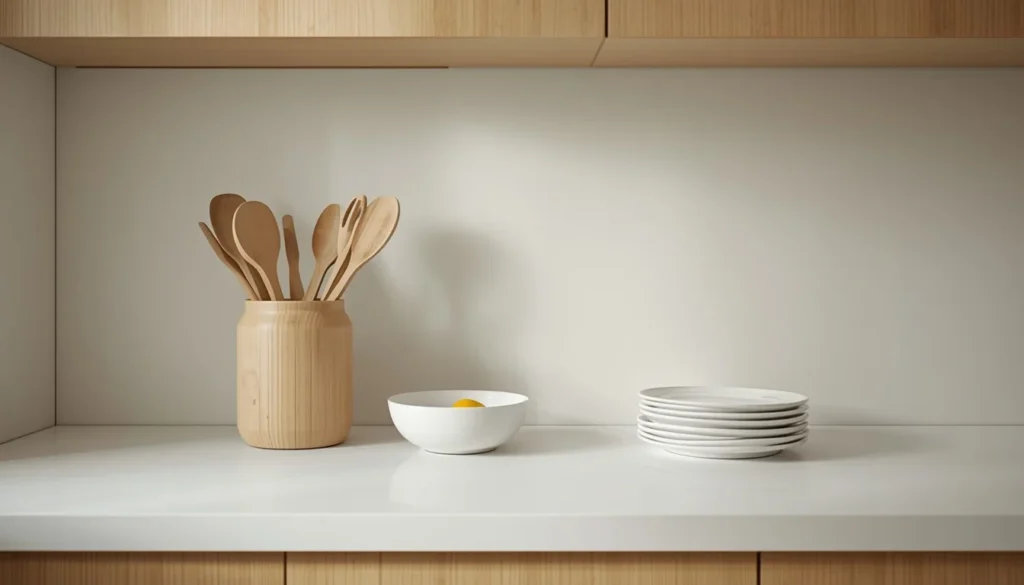
Over-the-door racks, hanging pot rails, magnetic spice tins, stacked baskets on every surface — it’s tempting to add storage everywhere a tiny kitchen has a gap, but past a certain point it starts working against you. A kitchen that’s functionally organized but visually busy still feels cramped, because your eye can’t find a resting spot anywhere in the room.
The fix isn’t more storage, it’s an edit. Keep only what you use weekly out in the open — everyday plates, one or two utensil crocks, maybe a fruit bowl. Store the rest, including small appliances you use monthly rather than daily, in a hall closet or under-bed bin if the kitchen itself has no spare cabinet. Vertical space above cabinets is genuinely useful for rarely-used items, but it should be closed storage, not another open display.
A tiny kitchen that looks calm usually has less visible stuff than a “maximized” one, not more.
What Actually Makes a Tiny Apartment Kitchen Work
Once you clear out the rules that don’t hold up, the pattern that’s left is pretty consistent: contrast beats color-avoidance, edited storage beats maximized storage, and reversible upgrades beat expensive ones — especially if you’re renting. None of the seven myths above are really about kitchens at all. They’re about mistaking a rule of thumb for an actual design principle.
If you only take one thing from this list, let it be this: before you paint everything white or tear out a cabinet, ask whether the change is solving a lighting problem, a clutter problem, or a genuine layout problem. Most tiny apartment kitchen decor ideas that go wrong are aimed at the wrong one of those three Fix the actual problem, and the “tiny” part of your kitchen stops being the thing you notice first.
For further inspiration on how professional designers balance color and contrast in compact spaces, Architectural Digest small kitchen design feature is worth a look before you pick up a paintbrush.
Frequently Asked Questions
What is the best color for a tiny apartment kitchen?
There isn’t a single best color — warm off-whites keep a small kitchen feeling airy without looking flat, while a contrasting lower-cabinet color (like navy or sage) can actually make the space feel more intentional. What matters more than the color itself is lighting and contrast between surfaces.
Can you use dark cabinets in a small kitchen?
Yes. Dark lower cabinets work well in small kitchens as long as the upper cabinets and lighting stay light and reflective. Under-cabinet LED lighting and a glossy backsplash help dark tones read as stylish rather than cramped.
How do I make a tiny apartment kitchen feel bigger without renovating?
Focus on reversible changes: peel-and-stick backsplash, one edited open shelf instead of full open shelving, a rolling cart for extra prep space, and warmer lighting. These tiny apartment kitchen decor ideas cost far less than a renovation and most can be undone at move-out.
Do open shelves make a small kitchen look bigger?
Only in moderation. One curated shelf with a handful of daily-use items can open up a wall visually, but replacing all upper cabinets with open shelving usually adds clutter and maintenance in a kitchen that gets regular daily use.