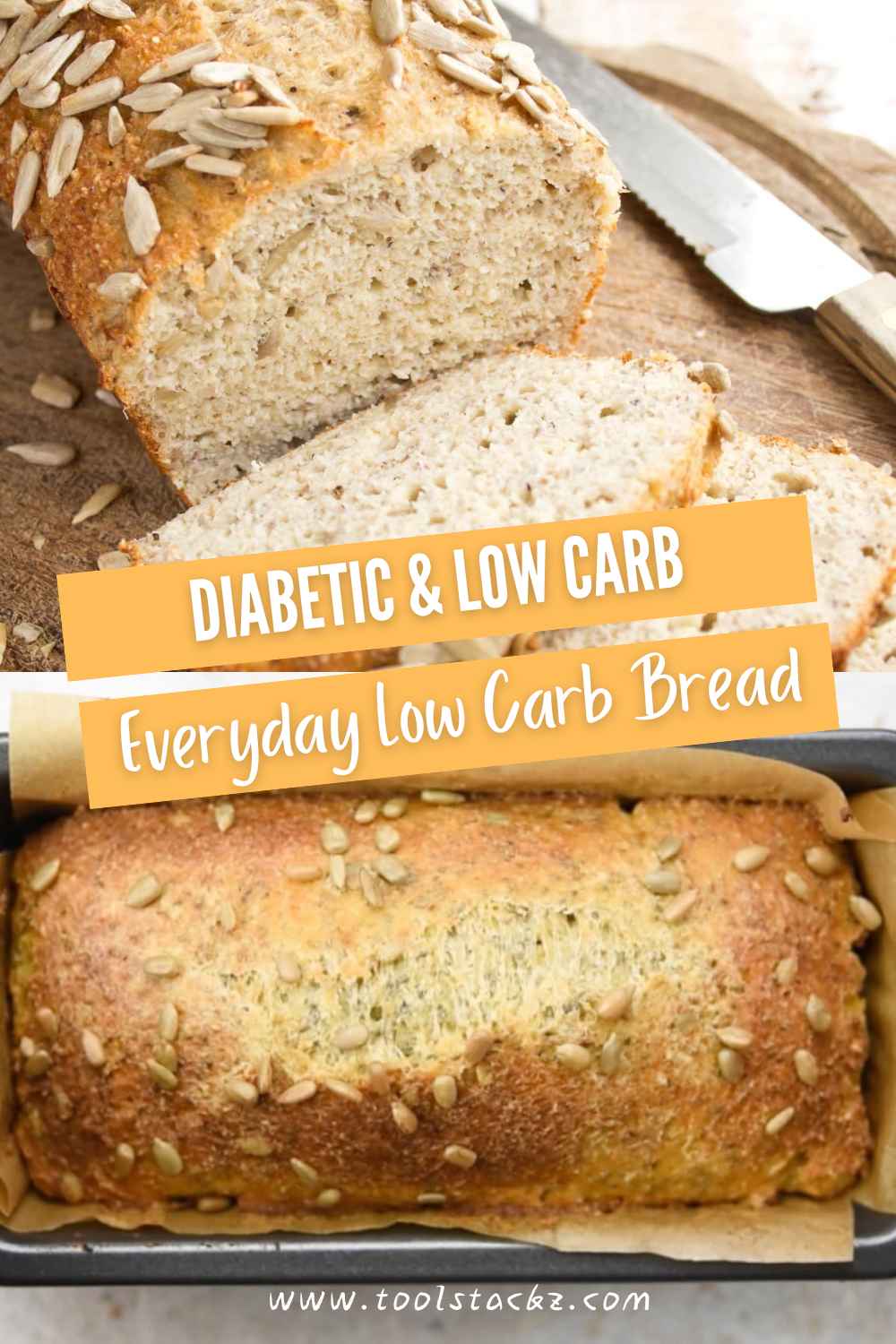
Everyday Low Carb Bread
I remember the exact moment I gave up on bread. It was about eight months after my type 2 diabetes diagnosis, and I was standing in the bakery aisle holding a loaf I used to buy every single week, doing that thing where you flip it over and squint at the nutrition label like it might change if you stare hard enough. It didn’t. I put it back and went home with nothing, which is a strange kind of grief when you think about it — mourning toast.
This everyday low carb bread is what eventually filled that gap, and it’s stuck around in my kitchen ever since. It’s not trying to be a fluffy white sandwich loaf or fool anyone into thinking it’s a bakery bread. What it is, though, is a genuinely satisfying, blood sugar friendly bread you can slice, toast, top, or dunk into soup without the spike-and-crash cycle that used to follow every slice of “regular” bread. If you’ve been searching for a low carb bread that actually holds together, tastes like something you’d want to eat again tomorrow, and doesn’t require a trip to a specialty store, this is the one I keep coming back to.
Why This Bread Works So Well for Blood Sugar Management
Here’s the thing about most bread, low carb or not — it’s the digestible carbohydrate content that matters most for blood sugar, and this loaf is built almost entirely around ingredients that don’t behave like flour in your body. There’s no wheat flour here at all. Instead, the structure comes from eggs, quark (or Greek yogurt, if that’s what’s in your fridge), almond flour, and a mix of psyllium husk and chia seeds that do the job starch normally does — they hold moisture, create structure, and give you that satisfying chew — without flooding your bloodstream with glucose.
What you end up with is a loaf that’s genuinely high in fiber and protein relative to its carb count, and low in glycemic load overall, which is a different measure than glycemic index because it accounts for portion size too. Fiber slows digestion, which means the carbs that are present get absorbed more gradually instead of all at once. Protein and fat do something similar, blunting the speed at which anything you eat alongside this bread hits your system. That’s not a medical claim, just basic digestive physiology — and it’s worth saying plainly that if you’re managing type 2 diabetes or any blood sugar condition, checking in with your doctor or a registered dietitian about how specific foods fit your personal plan is always the smarter move than trusting any blog, including this one, to know your body better than they do.
A Practical Note on Portions
Even good-for-you foods deserve portion sense. This loaf is dense — much more so than wheat bread — so a single slice tends to be more filling than you’d expect. That’s actually a nice side effect for anyone watching blood sugar levels: you’re less likely to eat three slices without noticing, the way you might with airy white bread.
The Ingredients Doing the Real Work
Psyllium husk is the unsung hero of this recipe, and if you’ve never baked with it before, it’s worth understanding what it’s doing. It’s an almost pure soluble fiber that swells dramatically when it hits liquid, which is exactly why the dough needs that 15-minute rest before baking — it’s not a suggestion you can skip. That swelling is what gives this bread its bread-like crumb instead of a dense, eggy brick. Soluble fiber like this has also been studied for its role in supporting healthy blood sugar levels and improving how the body responds to insulin, which makes it a genuinely functional ingredient here, not just a binder.
Chia seeds pull double duty. Texturally, they add a subtle nuttiness and little pops of texture throughout the loaf. Nutritionally, they’re another soluble fiber powerhouse, plus they bring omega-3 fats to the table, which matters because dietary fat is one more piece of the puzzle in slowing digestion and keeping you fuller longer after a meal.
Almond flour is what gives this bread its tender, slightly rich crumb instead of the gumminess you sometimes get from all-egg, all-psyllium low carb breads. It’s naturally low in carbohydrates and higher in healthy monounsaturated fats compared to wheat flour, and it brings a mild, faintly sweet, nutty flavor that works whether you’re going savory with avocado or leaning into something like nut butter and a few berries.
Quark (or Greek yogurt, if quark isn’t easy to find where you live) is the ingredient that keeps this bread from tasting like a low carb science experiment. It adds moisture and a gentle tang, similar to what buttermilk does in traditional baking, and it brings a solid dose of protein along for the ride — which, again, is part of what makes this loaf more blood sugar friendly than a typical starchy bread.
Tips I’ve Learned From Making This More Times Than I Can Count
The single biggest mistake people make with this bread is skipping or rushing the resting time. I get it — you’re hungry, the dough is mixed, the oven’s hot. But psyllium and chia need that quarter hour to properly absorb the liquid and firm up the batter. Skip it, and you’ll end up with a loaf that’s dense in the middle and doesn’t rise properly, even though the ingredients are all correct.
Second mistake: using psyllium husk powder instead of whole husks without adjusting the amount. Powder is much more concentrated and absorbs liquid faster and more intensely, so if that’s what you have, cut the amount roughly in half, as noted in the ingredient list. Using the full quantity of powder will give you a loaf with the texture of a hockey puck — I’ve been there.
Also, don’t skip lining the tin with parchment. This dough is sticky going in and the crust firms up nicely against the sides of the tin, which makes it genuinely annoying to remove without parchment doing the work for you.
One more thing worth knowing: this bread smells done before it is done. The almond flour toasts beautifully and gives off a lovely aroma well before the center has fully set. Trust the clean-knife test, not your nose.
Substitutions and Variations
If quark isn’t something you can find, full-fat Greek yogurt is a genuinely good swap — just make sure it’s thick and not the drinkable style, or your dough will be too loose. For a dairy-free version, a very thick unsweetened coconut yogurt works, though the flavor will shift slightly toward coconut.
Nut-free households can swap the almond flour for sunflower seed flour in equal measure, though be aware that sunflower seed flour can sometimes react with baking powder and turn the crumb slightly green — totally harmless, just a little startling the first time you see it.
Some readers like to add a tablespoon of caraway or a handful of chopped olives for a more savory, rustic loaf. Others go the other direction with a swirl of cinnamon (which, incidentally, has some research behind it for supporting insulin sensitivity) and a spoonful of a diabetic-friendly sweetener like erythritol for something closer to a breakfast bread. Both directions work with the same base dough.
What to Serve It With
This bread shines as a base for open-faced sandwiches — a layer of avocado, a soft-boiled egg, and everything bagel seasoning is my go-to lunch. It also holds up beautifully toasted with a spread of nut butter, or alongside a bowl of soup where you want something to soak up broth without turning to mush the way regular bread does.
For blood sugar balance, pairing this bread with a source of protein and some healthy fat — smoked salmon, a fried egg, hummus — is a smarter move than eating it alone, even though the bread itself is already fiber-forward. That combination is really the foundation of a low carb, low glycemic approach to eating in general: build plates and snacks around protein, fiber, and fat, and let carbohydrates play a smaller supporting role.
Storage and Make-Ahead Tips
This loaf keeps well in the fridge, wrapped in a clean kitchen towel or stored in an airtight container, for about five to six days — the psyllium actually helps it stay moist longer than a typical quick bread. I like to slice the whole loaf before storing it, which makes grabbing a piece for toast that much easier on a rushed morning.
It also freezes really well. Slice it first, then freeze the slices with a small piece of parchment between each one so you can pull out exactly what you need. Straight from frozen, a slice goes into the toaster beautifully — no thawing required, no soggy centers. I keep a stash in my freezer more often than not.
Everyday Low Carb Bread: Easy Diabetic-Friendly Recipe
A blood sugar friendly, low carb bread recipe with almond flour, psyllium, and chia — easy to make, freezer-friendly, and genuinely satisfying.
| Prep Time | 20 min |
| Cook Time | 45 min |
| Servings | 12 |
Ingredients
- 1 cup quark 250g, (use Greek yoghurt as an alternative)
- 3 eggs
- 1 cup almond flour 100g, or ground almonds
- 2 tablespoon coconut flour 12g
- 3 tablespoon psyllium husks 18g, 1.5 tbsp if using psyllium husk powder)
- 3 tablespoon chia seeds 30g
- ½ tablespoon baking powder 6g
- ½ tsp / large pinch salt
- 2 tablespoon sunflower seeds optional, 15g
Instructions
- Line a small loaf tin (450ml capacity) with parchment paper.
- In a bowl, mix the eggs and quark with an electric mixer until smooth.
- Add the almond flour/ground almonds, coconut flour, baking powder and salt. Mix until fully combined.
- Last, add the chia seeds and psyllium husks. Add the sunflower seeds if you’re using them.
- Fill the dough into the loaf tin and let it rest for 15 minutes so the psyllium and the chia can absorb the liquid. Sprinkle sunflower seeds on the top.
- Preheat the oven to 170 Celsius / 340 Fahrenheit.
- Bake for around 45 minutes or until the top is lightly browned and a knife inserted comes out clean.
| Nutrition (per serving) | |
|---|---|
| Calories | 107 kcal |
| Total Carbohydrates | 6.3 g |
| Protein | 7.6 g |
| Fat | 6.3 g |
| Fiber | 3.9 g |
| Sugar | 0.3 g |
A Loaf Worth Keeping in Rotation
There’s something quietly satisfying about having a bread you don’t have to think twice about, one that fits into a diabetic-friendly meal plan without feeling like a compromise. This one has earned a permanent spot in my baking rotation, and I hope it finds its way into yours too. If you make it, I’d genuinely love to hear how it turns out for you, and whether you tried any of the swaps — recipes like this one only get better with a few more hands and ovens testing them out.